The Golden Rocks of the Sinyaya River. The Sinyaya and Lena Pillars
The Sinyaya Pillars, the Lena Pillars Rafting, break on the Sinyaya and Lena Rivers.
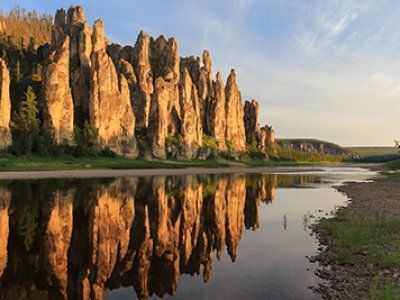
The Sinyaya River is the most beautiful river on the planet, and the Sinyaya Pillars are the masterpiece of natural architecture. People often post photos of the rocks of the Sinyaya River on the Internet for advertising purposes, passing them off as the Lena Pillars.
The route passes through the territories of the Sinyaya and Lena Pillars nature parks, covering all the cliffs of the Sinyaya River and the Lena Pillars.
The Sinyaya and Lena Pillars as natural monuments are included in the list of UNESCO World Heritage Sites.
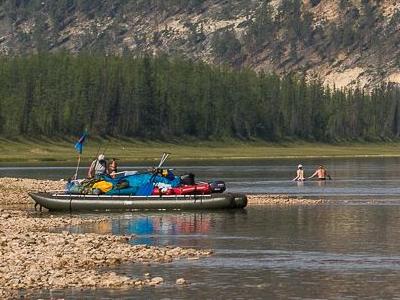
6-7 meter inflatable catamarans with outboard motors ensure comfort and safety.
In 2021, our route took 1st place in the Route of Russia competition in the active tourism category. The Sinyaya River pillars consist of 37 groups of cliffs located 140 kilometers up to the river’s mouth.
The height of the Sinyaya Pillars reaches up to 180 meters. During the tour, tourists have the opportunity to climb the cliffs. The height of the Lena Pillars is 225 meters, and the ascent is made via a staircase.
Camps are located on pebble spits opposite the cliffs. The length of the route is 127 km on the Sinyaya River and 56 km on the Lena River.
Geology of the Cliff Formations
Geologically, the Lena and Sinyaya Pillars represent an example of early Paleozoic sedimentary rock formations.
In ancient times, a shallow warm sea washed over the site where they now stand, covering the ancient Siberian continental area.
The formation of the pillars as a landform dates back approximately 400,000 years, which is relatively recent in geological terms. The territory of the Siberian platform underwent gradual uplift, resulting in the formation of faults and the creation of deep river valleys. This led to the activation of karst processes, which, along with ongoing erosional weathering, produced the whimsical and diverse forms of cliffs composed of carbonate rocks.
Wildlife
The Sinyaya Nature Park is rich in taiga animals: roe deer, musk deer, red deer and reindeer, moose, brown bears, wolves, foxes, sables and others.
In summer it is a nesting ground for many different ducks, falcons, peregrine falcons, gyrfalcons and other birds.
Encounters between tourists and aggressive animals in the taiga have not been reported.
About Mosquitoes, Horseflies, and Midges
The Sinyaya River is located in Central Yakutia. Here, the number of mosquitoes and other insects is no greater than in the Moscow region. The month with the highest insect activity is June; however, starting from the third day, camps are set up on pebble spits away from the forest, allowing tourists to forget about them.
The cost does not include the services of a cook! Meal preparation is carried out under the guidance of an instructor by the tourists themselves through duty shifts.
The route passes through the territories of the Sinyaya and Lena Pillars nature parks, covering all the cliffs of the Sinyaya River and the Lena Pillars.
The Sinyaya and Lena Pillars as natural monuments are included in the list of UNESCO World Heritage Sites.
6-7 meter inflatable catamarans with outboard motors ensure comfort and safety.
In 2021, our route took 1st place in the Route of Russia competition in the active tourism category. The Sinyaya River pillars consist of 37 groups of cliffs located 140 kilometers up to the river’s mouth.
The height of the Sinyaya Pillars reaches up to 180 meters. During the tour, tourists have the opportunity to climb the cliffs. The height of the Lena Pillars is 225 meters, and the ascent is made via a staircase.
Camps are located on pebble spits opposite the cliffs. The length of the route is 127 km on the Sinyaya River and 56 km on the Lena River.
Geology of the Cliff Formations
Geologically, the Lena and Sinyaya Pillars represent an example of early Paleozoic sedimentary rock formations.
In ancient times, a shallow warm sea washed over the site where they now stand, covering the ancient Siberian continental area.
The formation of the pillars as a landform dates back approximately 400,000 years, which is relatively recent in geological terms. The territory of the Siberian platform underwent gradual uplift, resulting in the formation of faults and the creation of deep river valleys. This led to the activation of karst processes, which, along with ongoing erosional weathering, produced the whimsical and diverse forms of cliffs composed of carbonate rocks.
Wildlife
The Sinyaya Nature Park is rich in taiga animals: roe deer, musk deer, red deer and reindeer, moose, brown bears, wolves, foxes, sables and others.
In summer it is a nesting ground for many different ducks, falcons, peregrine falcons, gyrfalcons and other birds.
Encounters between tourists and aggressive animals in the taiga have not been reported.
About Mosquitoes, Horseflies, and Midges
The Sinyaya River is located in Central Yakutia. Here, the number of mosquitoes and other insects is no greater than in the Moscow region. The month with the highest insect activity is June; however, starting from the third day, camps are set up on pebble spits away from the forest, allowing tourists to forget about them.
The cost does not include the services of a cook! Meal preparation is carried out under the guidance of an instructor by the tourists themselves through duty shifts.
- meeting at the airport on the day the tour begins;
- transfer from Yakutsk to the Sinyaya River, and from Tit Ary to Yakutsk;
- accident insurance with the insurance company DalZHASO JSC, Khabarovsk;
- financial liability insurance for the tour operator with the insurance company DalZHASO JSC, Khabarovsk;
- cost of hiking food supplies;
- services of a guide-instructor;
- provision of hiking equipment (inflatable catamarans with outboard motors, tents, sleeping bags, mats, 100-liter dry bags, life jackets, campfire equipment, camp cookware).
- meeting and transfer to the hotel if arrival is not on the day of departure for the tour;
- transfer from the hotel to the airport;
- meals at roadside cafes during the transfer to the starting point of the hike;
- services of a cook (meal preparation is carried out by duty shifts among the tourists under the guidance of the instructor-guide).
- waterproof backpack/bag;
- sit mat;
- sunglasses;
- wading boots/jack boots/waders
- sneakers (with good soles)/tracking boots;
- hiking sandals;
- headgear;
- raincoat;
- windbreaker/storm jacket;
- warm down jacket (for the evening);
- fleece jacket/warm sweatshirt;
- thermal underwear (for sleeping);
- warm/thin socks;
- long sleeve sun shirt;
- swimsuit/swim trunks;
- t-shirts/shirts;
- pants;
- shorts;
- paddling gloves (optional);
- mug, spoon, bowl;
- thermos (optional);
- mosquito repellent/reftamid/hardex;
- mosquito bite repellent;
- SPF cream (50-100);
- personal first aid kit;
- personal hygiene (toilet paper, soap, paste, brush, towel);
- power bank (portable battery)/solar panel;
- flashlight (required in mid-July);
- water for the road (1.5-2.0 liters per person);
- snack for the road.
- wading boots - 1500 RUB for the entire duration of the tour;
- extra space in a tent - 5000 RUB;
- extra 100L dry bag - 1000 RUB;
- extra sit mat - 500 RUB;
- InYakutia branded T-shirt - 2000 RUB;
- fishing gear set (rod, reel with line, lure) - 5000 RUB.