

"The Yakutsk Political Exile" Cherkekh Historical and Memorial Museum
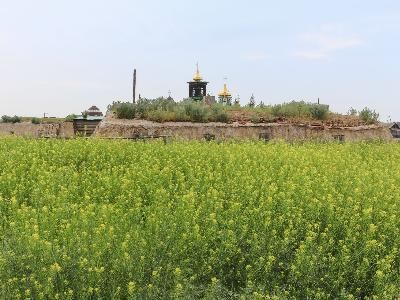
It is one of the major museums of the republic, which has a rich collection of exhibits of everyday life and history of Northern people.
The Cherkekh Historical and Memorial Museum “Yakutsk Political Exile” was established by the people of the Alekseevsk District of the Yakut ASSR on the initiative of D. K. Sivtsev-Suorun Omollon, people’s writer, honored art worker of the RSFSR and the Yakut ASSR.
The museum shows life and activities of the tsar’s exiles in the 80-90s of the 19th century in the Yakutsk region, their beneficial influence on all spheres of material and spiritual life of the Yakuts, which had a decisive role in the happy fate of the Yakut people.
The museum has memorial and recreated copies of yurts of the political exiles E.K. Pekarsky, V.M. Ionov, P.A. Alekseev, V.G. Korolenko and others, as well as unique monuments of history and architecture of the Yakut people of the 19-20th centuries.
Since 1979, the museum has been developing as a branch of Yaroslavsky Yakutsk State United Museum.
The museum specializes in historical and revolutionary, historical and architectural everyday life exhibits.
The main fund is 5562 items.
The total area is 11.5 hectares.
The museum reveals the most interesting phenomenon of our republic’s history - the Yakut political exile. Several generations of progressive and highly educated people of Russia, united by the desire to benefit the society, ended up in the remote northern outskirts of the Russian Empire because of the exile.
The architectural and ethnographic material collected in the museum deserves no less attention. It was here that the Yakut yurt-balagan and the Sakha summer dwelling - a birch bark urasa - were presented for the first time as cultural monuments. There is a restored, completely unique mill - a bull-driven topchanka, transported fr om the Sylan village of Churapcha. The siege barn of the Megino rich man Markovich, built to protect him from the raids of Vasily Manchary, reflects the influence of the style of architecture of Russian wooden fortresses. The uniqueness and diversity of Yakut buildings are evidenced by the heptagonal summer hut “babaaryna” and wooden urasa “with eight corners”. You can find Yakut blacksmithing in a yurt - a forge equipped with all the tools. Every object reflects the life of the region wh ere the exiled revolutionaries found themselves.
Tatta St. Nicholas Church, built in 1912, is the main and the largest object. The church was almost ruined at the time of the museum’s establishment and was restored by local craftsmen under the guidance of master blacksmith N.A. Efremov - Tabytal. Apparently, this is the first case in Yakutia when a church building was museumized and taken under the protection of the state.
The Cherkekh Museum of Political Exile demonstrated a complex and integrated approach to the historical material, which in unity with nature and architectural and artistic environment “sounded” here in full force, with amazing clarity presenting to the viewer a peaceful and fruitful dialog of cultures, being at the same time a monument of respectful attitude of Yakuts to the history of their homeland.
The museum shows life and activities of the tsar’s exiles in the 80-90s of the 19th century in the Yakutsk region, their beneficial influence on all spheres of material and spiritual life of the Yakuts, which had a decisive role in the happy fate of the Yakut people.
The museum has memorial and recreated copies of yurts of the political exiles E.K. Pekarsky, V.M. Ionov, P.A. Alekseev, V.G. Korolenko and others, as well as unique monuments of history and architecture of the Yakut people of the 19-20th centuries.
Since 1979, the museum has been developing as a branch of Yaroslavsky Yakutsk State United Museum.
The museum specializes in historical and revolutionary, historical and architectural everyday life exhibits.
The main fund is 5562 items.
The total area is 11.5 hectares.
The museum reveals the most interesting phenomenon of our republic’s history - the Yakut political exile. Several generations of progressive and highly educated people of Russia, united by the desire to benefit the society, ended up in the remote northern outskirts of the Russian Empire because of the exile.
The architectural and ethnographic material collected in the museum deserves no less attention. It was here that the Yakut yurt-balagan and the Sakha summer dwelling - a birch bark urasa - were presented for the first time as cultural monuments. There is a restored, completely unique mill - a bull-driven topchanka, transported fr om the Sylan village of Churapcha. The siege barn of the Megino rich man Markovich, built to protect him from the raids of Vasily Manchary, reflects the influence of the style of architecture of Russian wooden fortresses. The uniqueness and diversity of Yakut buildings are evidenced by the heptagonal summer hut “babaaryna” and wooden urasa “with eight corners”. You can find Yakut blacksmithing in a yurt - a forge equipped with all the tools. Every object reflects the life of the region wh ere the exiled revolutionaries found themselves.
Tatta St. Nicholas Church, built in 1912, is the main and the largest object. The church was almost ruined at the time of the museum’s establishment and was restored by local craftsmen under the guidance of master blacksmith N.A. Efremov - Tabytal. Apparently, this is the first case in Yakutia when a church building was museumized and taken under the protection of the state.
The Cherkekh Museum of Political Exile demonstrated a complex and integrated approach to the historical material, which in unity with nature and architectural and artistic environment “sounded” here in full force, with amazing clarity presenting to the viewer a peaceful and fruitful dialog of cultures, being at the same time a monument of respectful attitude of Yakuts to the history of their homeland.