

The Indigirka River
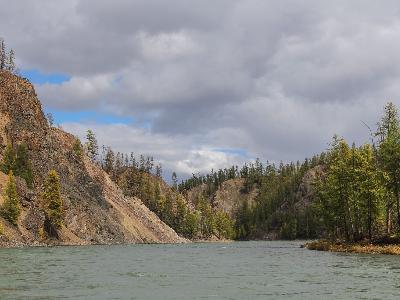
The river is 1,726 km long and its basin area is 360,000 square km. The Indigirka is the third largest river in the region (after the Lena and Kolyma) and the 10th largest in Russia.
The Indigirka (Yakut Индигиир) is a river in northeastern Yakutia.
Name
The Indigirka hydronym originates fr om the Even clan name indigir, the name of a tribe that used sled dogs - laikas, the ancestors of modern North American huskies.
Hydrography
The beginning of the Indigirka River is the confluence of two rivers – Tuora-Yuryakh and Taryn-Yuryakh, which originate on the northern slopes of the Khalkan Range; it flows into the East Siberian Sea. The total length of the Indigirka and Tuora-Yuryakh is 1,977 km. The sources of the Tuora-Yuryakh start from lakes Vodorazdelnoye, Labynkyr, Vorota, Yastrebinoye, and Alysardakh.
Many of the Indigirka’s headwaters start from the non-thawing glaciers of the mountain ranges that the river basin is rich in.
The largest glaciers of the Indigirka River
Glaciers of the Suntar Khayata Ridge
Vaskovsky (7.2 km long, area of 7.5 km2), Beryl (6.9 km2), Bolshoy Mus-Khaya (4.2 km2), Klyukin (4.1 km2).
Glaciers of the Buordakh massif of the Chersky mountain system
Obruchena (8.6 km long, area of 7.6 km2), Tsaregradsky (8.9 km, 12 km2), Sumgin (6.8 km, 3.7 km2).
The Indigirka basin is located in the area of permafrost rock masses, that is why its rivers are characterized by the formation of giant glaciers. The largest of them is Ulakhan Taryn (Big Glacier) located on the Moma River, right tributary of the Indigirka. It is the largest glacier in Russia and in the world with a length of 26 km, area of more than 100 km², thickness of 3 to 8 m, and a total volume of about 0.5 km³.
According to the structure of the valley and channel and the speed of flow, the Indigirka is divided into two sections: upper mountainous (640 km) and lower plain (1,086 km). After the confluence of the Tuora-Yuryakh and Taryn-Yuryakh rivers, the Indigirka flows northwestward along the most depressed part of the Oymyakon Plateau, turning northward and cutting through a series of mountain chains of the Chersky Range. The valley here is from 0.5-1 to 20 km wide, the channel is pebbly, there are a lot of riffles, the flow velocity is 2-3.5 m/sec. At the crossing of the Porozhny and Chemalga ridges of the Chersky Mountain System, the Indigirka flows in a deep gorge and forms rapids; the flow velocity is 4 m/s and higher.
The lower section begins above the mouth of the Moma River, wh ere the Indigirka enters the Moma-Selennyakh depression. The Indigirka valley widens here, the channel abounds with shoals and spits, and in some places it splits into branches. Having bypassed the Moma Ridge, the Indigirka flows further along the lowland plain. In the Abyi lowland it is very sinuous, while in the Yana-Indigirka lowland the Indigirka is characterized by straight long stretches of 350-500 m wide.
At 130 km fr om the mouth, the Indigirka splits into branches (the main ones are the Russko-Ustyinsky; the Sredny – the largest; Kolymsky), forming a delta (with an area of 5500 km²). The Indigirka estuary is separated from the sea by a shallow bar. The rate of advancement of the delta’s sea edge into the sea is insignificant.
There are a lot of groundwater outlets in the mountainous part of the Indigirka, due to which the river in these places does not freeze even in the bitterest frosts. And in places wh ere ice water enters the river, winter travel on winter roads is difficult.
Sights of the river
1. Kisilyakh of Oymyakon
2. Indigir Gorge
3. Kisilyakh of Ulakhan Sis
4. Big Glacier of Moma
5. Balagan Tas extinct volcano
6. Mountains Pobeda (3,003 m), Mus- Khaya (2,959 m), Beryl (2,933 m), Palatka (2,797 m).
Name
The Indigirka hydronym originates fr om the Even clan name indigir, the name of a tribe that used sled dogs - laikas, the ancestors of modern North American huskies.
Hydrography
The beginning of the Indigirka River is the confluence of two rivers – Tuora-Yuryakh and Taryn-Yuryakh, which originate on the northern slopes of the Khalkan Range; it flows into the East Siberian Sea. The total length of the Indigirka and Tuora-Yuryakh is 1,977 km. The sources of the Tuora-Yuryakh start from lakes Vodorazdelnoye, Labynkyr, Vorota, Yastrebinoye, and Alysardakh.
Many of the Indigirka’s headwaters start from the non-thawing glaciers of the mountain ranges that the river basin is rich in.
The largest glaciers of the Indigirka River
Glaciers of the Suntar Khayata Ridge
Vaskovsky (7.2 km long, area of 7.5 km2), Beryl (6.9 km2), Bolshoy Mus-Khaya (4.2 km2), Klyukin (4.1 km2).
Glaciers of the Buordakh massif of the Chersky mountain system
Obruchena (8.6 km long, area of 7.6 km2), Tsaregradsky (8.9 km, 12 km2), Sumgin (6.8 km, 3.7 km2).
The Indigirka basin is located in the area of permafrost rock masses, that is why its rivers are characterized by the formation of giant glaciers. The largest of them is Ulakhan Taryn (Big Glacier) located on the Moma River, right tributary of the Indigirka. It is the largest glacier in Russia and in the world with a length of 26 km, area of more than 100 km², thickness of 3 to 8 m, and a total volume of about 0.5 km³.
According to the structure of the valley and channel and the speed of flow, the Indigirka is divided into two sections: upper mountainous (640 km) and lower plain (1,086 km). After the confluence of the Tuora-Yuryakh and Taryn-Yuryakh rivers, the Indigirka flows northwestward along the most depressed part of the Oymyakon Plateau, turning northward and cutting through a series of mountain chains of the Chersky Range. The valley here is from 0.5-1 to 20 km wide, the channel is pebbly, there are a lot of riffles, the flow velocity is 2-3.5 m/sec. At the crossing of the Porozhny and Chemalga ridges of the Chersky Mountain System, the Indigirka flows in a deep gorge and forms rapids; the flow velocity is 4 m/s and higher.
The lower section begins above the mouth of the Moma River, wh ere the Indigirka enters the Moma-Selennyakh depression. The Indigirka valley widens here, the channel abounds with shoals and spits, and in some places it splits into branches. Having bypassed the Moma Ridge, the Indigirka flows further along the lowland plain. In the Abyi lowland it is very sinuous, while in the Yana-Indigirka lowland the Indigirka is characterized by straight long stretches of 350-500 m wide.
At 130 km fr om the mouth, the Indigirka splits into branches (the main ones are the Russko-Ustyinsky; the Sredny – the largest; Kolymsky), forming a delta (with an area of 5500 km²). The Indigirka estuary is separated from the sea by a shallow bar. The rate of advancement of the delta’s sea edge into the sea is insignificant.
There are a lot of groundwater outlets in the mountainous part of the Indigirka, due to which the river in these places does not freeze even in the bitterest frosts. And in places wh ere ice water enters the river, winter travel on winter roads is difficult.
Sights of the river
1. Kisilyakh of Oymyakon
2. Indigir Gorge
3. Kisilyakh of Ulakhan Sis
4. Big Glacier of Moma
5. Balagan Tas extinct volcano
6. Mountains Pobeda (3,003 m), Mus- Khaya (2,959 m), Beryl (2,933 m), Palatka (2,797 m).