

Kangalassky Cape
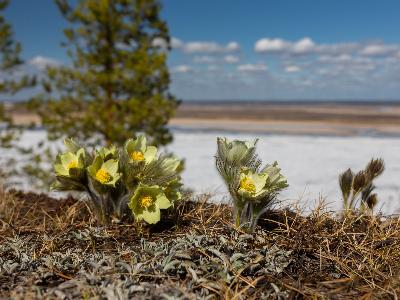
In the chronicles, it was known as Serguyev Stone. Kangalassky Cape was historically the boundary between the Nam, Borogon, and Kangalass tribes.
Kangalassky Cape is located 50 kilometers fr om Yakutsk. It is the northernmost point of the Tuymaada Valley, separating it from the Ensieli Valley. Currently, it marks the boundary of the Yakutsk urban district, Namsky, and Ust-Aldansky districts.
From the height of the cape, there are excellent views of the Ensieli and Tuymaada valleys and the Lena River.
Kangalassky Cape was formerly called Serguyev Cape (Сергуй Тааhа). Serguy was the leader of the Yakut tribe that lived at the beginning of the Ensieli Valley in the area of Ymyyakhtakh.
In ancient times, our ancestors believed that all misfortunes, including diseases, came to us from the Lower World. When local people began to die from unknown illnesses, Serguy, believing that the forces of the Lower World were angered and were sending diseases, ordered the closure of a deep cave located in one of the ravines of the cape, separating the Tuymaada and Ensieli valleys. Since then, this cape has been called Serguyev Cape.
It seems that it became known as Kangalassky Cape with the arrival of Russian Cossacks when Pyotr Beketov established his fort on the land of his ally Legey. Across the river were the hostile Nam tribes, and beyond the cape lay the lands of the powerful Kangalass tribe, which frequently raided Legey's lands and besieged the fort several times.
From the height of Kangalassky Cape, one can see the area of Voin on the opposite bank of the Lena River, wh ere the Yakut fort built by Pyotr Beketov's Cossacks once stood.
Along the route, there is a deep ravine in which lies the cave sealed by Serguy.
Kangalassky Cape is also known for the fact that during the Great Patriotic War deserters hid in the forest of the cape. According to stories that have reached us, they lived in dugouts. It is possible that these dugouts were discovered during one of our hikes.
From the height of the cape, there are excellent views of the Ensieli and Tuymaada valleys and the Lena River.
Kangalassky Cape was formerly called Serguyev Cape (Сергуй Тааhа). Serguy was the leader of the Yakut tribe that lived at the beginning of the Ensieli Valley in the area of Ymyyakhtakh.
In ancient times, our ancestors believed that all misfortunes, including diseases, came to us from the Lower World. When local people began to die from unknown illnesses, Serguy, believing that the forces of the Lower World were angered and were sending diseases, ordered the closure of a deep cave located in one of the ravines of the cape, separating the Tuymaada and Ensieli valleys. Since then, this cape has been called Serguyev Cape.
It seems that it became known as Kangalassky Cape with the arrival of Russian Cossacks when Pyotr Beketov established his fort on the land of his ally Legey. Across the river were the hostile Nam tribes, and beyond the cape lay the lands of the powerful Kangalass tribe, which frequently raided Legey's lands and besieged the fort several times.
From the height of Kangalassky Cape, one can see the area of Voin on the opposite bank of the Lena River, wh ere the Yakut fort built by Pyotr Beketov's Cossacks once stood.
Along the route, there is a deep ravine in which lies the cave sealed by Serguy.
Kangalassky Cape is also known for the fact that during the Great Patriotic War deserters hid in the forest of the cape. According to stories that have reached us, they lived in dugouts. It is possible that these dugouts were discovered during one of our hikes.